
Chapter 4 of the book “The God Delusion” is titled “Why There Almost Certainly is No God”. Here Richard Dawkins claims to have demonstrated that “God almost certainly does not exist”. The purpose of this article is to demonstrate that using the exact same reasoning Richard Dawkins “almost certainly does not exist” either !
In the quotes from the God Delusion book below we will first quote his reasoning allegedly demonstrating the non-existence of God. Then following we will simply substitute the word “[Dawkins]” where the book used the word “God”, and substitute the alleged creations of Dawkins [ his books] in place of the alleged creations of God [such as the “universe”, etc.]. No other changes will be made.
Here we go . . .
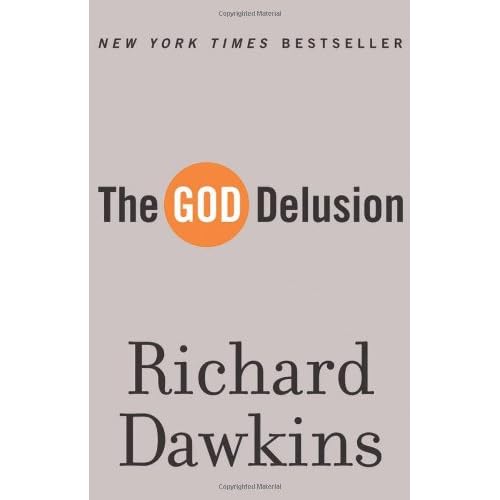
Dawkins’ reasoning about the existence of God:
“The argument from improbability, properly deployed, comes close to proving that God does not exist” “My name for the statistical demonstration that God almost certainly does not exist is the Ultimate Boeing 747 gambit.” (p. 113, 2006 edition; p. 137, 2008 edition)
“The argument from improbability states that complex things could not have come about by chance.” “The greater the statistical improbability, the less plausible is chance as a solution: that is what improbable means.” (p. 114, 119, 2006 edition; p. 139, 145, 2008 edition)
“. . . any God capable of designing a universe, carefully and foresightfully tuned to lead our evolution, must be a supremely complex and improbable entity . . .” “. . . a God capable of designing a universe, or anything else, would have to be complex and statistically improbable.” (p. 147, 153, 2006 edition; p. 176, 183, 2008 edition)
“I left the conference stimulated and invigorated, and reinforced in my conviction that the argument from improbability – the ‘Ultimate 747′ gambit – is a very serious argument against the existence of God, and one to which I have yet to hear a theologian give a convincing answer . .” “If the argument of this chapter is accepted, the factual premise of religion – the God Hypothesis – is untenable. God almost certainly does not exist.” (p. 157, 158, 2006 edition; p. 187, 189, 2008 edition)
Exact same reasoning applied to Dawkins’ existence:
“The argument from improbability, properly deployed, comes close to proving that [Dawkins] does not exist” (p. 113, 2006 edition; p. 137, 2008 edition)
“The argument from improbability states that complex things could not have come about by chance.” “The greater the statistical improbability, the less plausible is chance as a solution: that is what improbable means.” (p. 114, 119, 2006 edition; p. 139, 145, 2008 edition)
“. . . any [Dawkins] capable of designing [a book carefully and foresightfully about evolution], must be a supremely complex and improbable entity . . .” “. . . a [Dawkins] capable of designing [a God Delusion book], or anything else, would have to be complex and statistically improbable.” (p. 147, 153, 2006 edition; p. 176, 183, 2008 edition)
“I left the conference stimulated and invigorated, and reinforced in my conviction that the argument from improbability – the ‘Ultimate 747′ gambit – is a very serious argument against the existence of [Dawkins], and one to which I have yet to hear a theologian give a convincing answer . .” “If the argument of this chapter is accepted, the factual premise of [anti]religion – the [Dawkins] Hypothesis – is untenable. [Dawkins] almost certainly does not exist.” (p. 157, 158, 2006 edition; p. 187, 189, 2008 edition)
The exact same reasoning in “The God Delusion” if applied to Dawkins refutes the existence of Dawkins himself!
“However statistically improbable the entity you seek to explain by invoking a designer, the designer himself has got to be at least as improbable. God is the Ultimate Boeing 747”.
The error in the above reasoning is the same as Dawkins’ argument against God’s existence,- that is equating “improbability of coming about by chance” with “improbability of existence.” Even though a Dawkins might be improbable by chance, this still does not mean that he would necessarily also be improbable as to existence ! This is because a Dawkins need not have necessarily have come about by chance, -but instead could have come about by some other non-chance means, or perhaps he even not have come about at all (i.e. he could hypothetically be eternal).
The reason the above faulty argument seems on the surface to “work” against the existence of a Dawkins is that though “improbable” is explicitely defined as referring to improbability as to having “come about by chance” in the first point, in later points (when it is referring to a person) its not explicitly defined as such. This allows for the subtleswitching of “improbability as to referring to existence” in these later points (expecially point #3).
If “improbability” were consistently and explicity defined (as referring to improabaility as to having “come about by chance”) throughout, then the fallacy would be easy to spot. The argument would simply be that: 1.) “Complex things could not have come about by chance”, 2.) a Dawkins would have to be complex, and hense improbable by chance, therefore 3.) conclusion: a Dawkins alsmost certaily does not exist.” The fallacy would then be easy to spot, since the argument would not support the conclusion in point #3. even if the first two points were correct.